
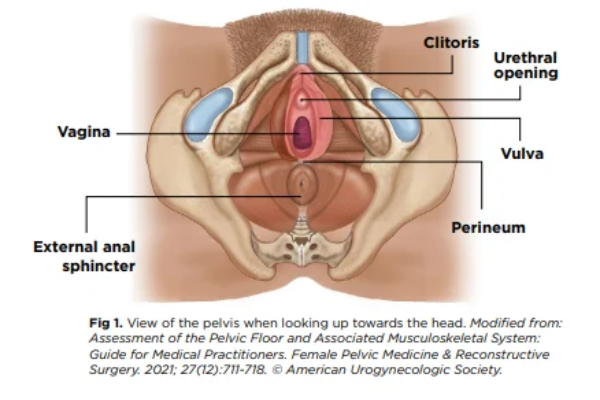
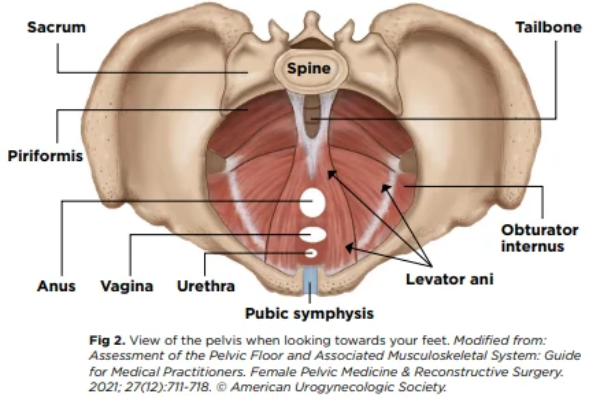
Your pelvic floor muscles stabilize your core and support everyday body functions. Think of them like a bowl at the bottom of your pelvis that holds up the organs that live there. If the bowl is strong and its contents are properly aligned, it can support everything inside it. But if the bowl becomes soft, stretched out, or misaligned, it has a harder time holding things in place, and they can fall down or even out of your body. This can happen over time because of injury and aging and may lead to a pelvic floor disorder.
What Are Some Examples of Pelvic Floor Disorders?
I Leak Urine
You might leak a few drops or a lot. Some people feel a sudden urge and can’t make it to the bathroom in time. Others find themselves going often, day and night.
If you leak when you laugh or exercise, it may be a sign of stress urinary incontinence (SUI). If you get strong, sudden urges that are hard to hold, it may be urge urinary incontinence (UUI), which can be linked to overactive bladder (OAB).
I Leak Poop
You might leak stool or gas, or have trouble controlling your bowels. This may be a sign of fecal incontinence. It’s more common than most people think: about one in twelve adults deal with it.
I Have a Bulge Near My Vagina
You might feel like you’re sitting on a ball or notice pressure and fullness. You may also have lower back pain or need to push to fully empty your bladder or bowels. Exposed tissue can rub against underwear or pads, causing irritation and bleeding. In more advanced cases, you may need to press the bulge back in to have sex or lift it to pee.
This may be a sign of pelvic organ prolapse, which hppens when the walls of the vagina lose their normal support. The vagina acts like a shelf nd when it weakends, organs that “rest” on it like the bladder or uterus can feel like they are dropping through the vaginal opening.